



How Many People Are Kidnapped Through Social Media?
In light of the increasing prevalence of online hazards to children, such as fraudulent schemes and predators, it is imperative for parents to take all necessary measures to ensure the safety of their children. In the present era, predators have identified social media as an ideal platform for abduction.
Approximately 500,000 pedophiles employ online platforms to specifically target children, as reported by the FBI. Consequently, authorities advise parents to reassess permitting their children to engage with social media without adequate supervision.
According to parental control data, a mere 54% of parents actively supervise their children’s utilization of electronic devices for internet access.
Explore the alarming realm of online predators through the analysis of social media kidnapping data and the potential consequences that families may face if they fail to exercise caution.
Kidnapping Through Social Media Statistics
The increase in indoor time among children leads to a transformation in their social abilities. In contemporary times, parents have the belief that ensuring their children remain at home and under vigilant oversight will ensure their safety.
Nevertheless, children can nevertheless avail themselves of an extensive online realm within the confines of their residences. Consequently, they are vulnerable to the perils posed by unfamiliar individuals outdoors.
Ultimately, this can result in the occurrence of social media kidnapping, as indicated by the following figures.
1. Sexual assault cases have spiraled by 300% through social media.
Social media accounts for 33% of all internet sex offenses. The escalating duration of social media engagement, currently average 2 hours and 31 minutes, poses novel hazards for children.
While many components of social media may be subject to regulation, its vast scope renders it unmanageable. Early exposure to this world can pose a significant risk.

Alt tag: Social media accounts for 33% of sex offenses.
Children are susceptible to encountering perilous individuals and detrimental material, hence increasing their vulnerability to attack and harassment.
In addition, the absence of age verification on social media platforms can lead to adults deceiving kids by providing false information about their age, so facilitating grooming and other forms of predatory behavior.
2. Over 4,000 kidnapping cases have been reported in South Africa in 2022.
The alarming incidence of social media abduction in South Africa commenced in 2020, with a claimed count of 4,000 occurrences. The Moti brothers in Polokwane presented the most captivating case. The police suspect that the kidnapping was a retaliatory act for a failed illicit transaction involving illicit funds.
Business Live further asserted that this illicit activity had become lucrative, and perpetrators perceived it as a convenient means to acquire funds in light of the economic downturns in South Africa.
3. 48% of child kidnapping victims in the US met their captors through social media platforms.
This emphasizes the importance of parental awareness regarding the potential hazards linked to the utilization of social networking platforms, as well as the necessity of implementing measures to supervise their children and ensure their well-being.
Adolescents are also advised to use prudence when engaging in online communication with unfamiliar individuals.
Statistics on the Demographic of Kidnapped Victims Via Social Media
Kidnapping is a terrifying ordeal that can occur to anyone, regardless of location. The likelihood of a child being abducted is estimated to be 1 in 300,000. Although seemingly inconsequential, the likelihood grows as a result of events such as:
- Gender
- Ethnicity
- Parental situation
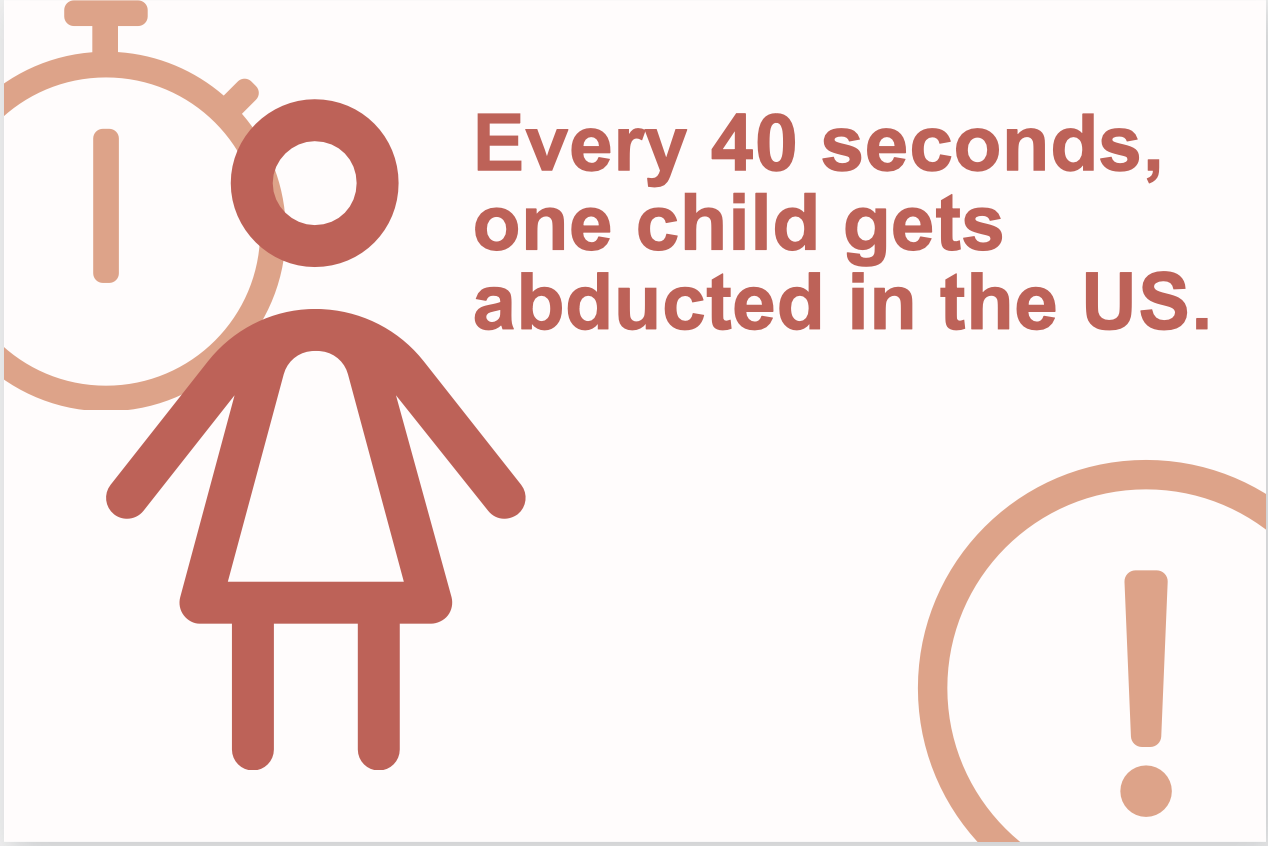
According to the United Nations Office on Drugs and Crime, Turkey exhibits the highest incidence rate of abduction cases worldwide, amounting to 46.67%. Approximately one youngster in the United States goes missing or is abducted every 40 seconds.
While digital kidnapping is predominantly observed in China and Mexico, S-RM has documented a growing number of such incidents in North America within the COVID-19 pandemic. The subsequent individuals are the typical targets:
- Offspring
- Guardians of absent offspring
- Individuals who have family members residing in foreign nations
- Elderly individuals who are especially susceptible to online fraudulent activities
In the following section, we will delve into the demographic characteristics of social media kidnappings.
4. 1 in 4 children freely shares personal information online when asked.
1,000 parents found that 25% of young children shared personal information with strangers online. They share information like:
- Full name
- Address
- Passwords
- Images

Disney’s Club Penguin, in collaboration with Childnet and the UK’s Exploitation and Online Protection Centre, found that 1 in 6 surveyed youngsters considered sharing such information to be appropriate.
5. According to the FBI, there were 337,195 NCIC entries for missing children in 2021 alone.
NCMEC administers a nationwide system, known as CyberTipLine, which allows the public and electronic service providers to report suspected cases of child sexual exploitation. Since its establishment in 1998, the organization has received a total of over 116 million reports. CyberTipLine received over 29 million reports in 2021, representing an increase from 21.7 million in 2020.

6. 40% of kids confess they ‘sometimes’ or ‘always’ change their privacy settings to ‘public’ to draw more followers.
On average, the children residing in Glasglow engage in social media activity approximately 47 times every day. Additional data reveals that a significant proportion of adolescents, specifically 43%, engage in the act of deleting their social media posts in response to unfavorable responses from their followers.
Based on the survey, the average number of friends per child on Facebook is 144, on Instagram it is 125, on Twitter it is 144, and on Snapchat it is 90.
In addition to their engagement with social media, these children possess an average of 43 friends in offline interactions. A parent divulged that their son possesses 900 followers on Instagram, although having only 200 acquaintances in person.
Social Media Kidnapping Trends
Just when you thought the internet could get any worse, social media started posing even more dangerous risks to expectant parents.
The phrase “catfishing” may be familiar to you; it refers to the practice of tricking a target into believing they are someone else on social media and entering into a fictitious virtual romance.
An adult sexually manipulated and abducted a 13-year-old child from Utah in April 2023, in the only known instance of catfishing.
Nevertheless, there will always be terrifying tales on social media. On the other hand, parents need to make every effort to protect their children’s privacy and guarantee that any personal data remains private.
See additional trends and information that you should be aware of below.
7. 89% of online child sexual exploitation occurs in chatrooms like Facebook Messenger.
Online predators will ask a child for sexually graphic photos of themselves, based on FBI reports of child sexual exploitation.
4% of kids receive aggressive internet chatroom solicitations from adults. For this reason, 58% of parents say they are concerned about the risks that strangers present on the internet. Youngsters ages 8 to 11 are aware of the problem and worry that others might find out about them.

8. Facebook, WhatsApp, and Snapchat accounted for 76% of child kidnapping cases involving social media.
On these networks, potential predators could send private messages or make comments. In order to garner trust, they would usually pretend to be younger siblings of the same age and engage in catfishing.
Additionally, predators may adopt an identity that predates that of the possible victim. After that, the predator will start dating the child and offer them presents, usually expensive things that the child wouldn’t be able to afford on their own.
Due to these platforms’ widespread use, it is simple for predators to locate victims and for young children to interact with them and come into contact with potentially dangerous interactions.
9. 1 in 33 children experiences being lured into sexual conversations or face-to-face meetings.
Parents often overlook discussions concerning internet strangers, despite children’s repeated warnings not to engage with strangers. Parents should spend time teaching their children about unhealthy relationships in light of the growing grooming pandemic in order to prevent these alarming statistics.
Additionally, 43% of kids between the ages of 8 and 13 talk on social media and gaming platforms with strangers.
Conclusion
Any youngster can fall prey to an online predator. Children need to learn from their parents and guardians how much information is too much and why it’s best to avoid sharing private information online.
Kids should be able to participate in social media and play games online while being safe. Among the many benefits of the Internet are its ability to connect people via social media, education, and entertainment. One can completely manage the dangers by maintaining open communication.